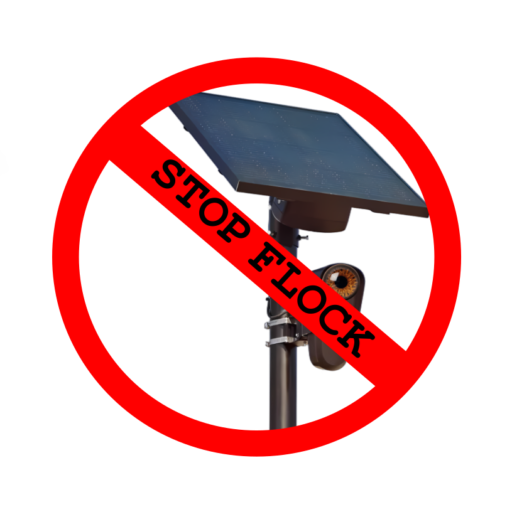

Throughout the United States, cities, counties, and states are turning to automated surveillance to solve their ever-growing crime problems. They use facial‑recognition cameras, emotion‑detection software, predictive‑policing algorithms, and even ‘smart’ cameras that claim to stop crime before it happens. Now, in this article I won’t begin to refute the use of all of these—though I could—but I want to focus on Automated License Plate Readers. Specifically, to make it simple, I want to focus on Flock cameras, a particular brand of ALPR. The reason I am going to focus on this variety is that it is most widely implemented.
I want to begin by explaining what a “Flock Camera” is. Though it could technically refer to the variety of tracking technologies that Flock Safety makes, I will use it to refer to their LPR (License Plate Reader) camera, and chances are if you hear someone referring to a “Flock Camera” they are probably referring to the same model. They are sleek, black cameras powered by a solar panel and are equipped with a SIM card for data transmission and an IR sensor for night vision. What differentiates them from other traffic cameras, such as the ones that already exist in practically every city, is the software. The function of these cameras is to automatically—that is, without human intervention—capture pictures of license plates and turn them into a searchable database for Law enforcement and other owners of Flock cameras.
Now that we know what a Flock camera is, I should explain why I think they are not a solution to growing crime, nor an acceptable law enforcement tool. The concerns I have about these cameras center around privacy, and ironically, safety. Flock conveniently addresses all of my concerns on their Privacy & Ethics page that they have, though as a personal note I might have a separate concern about the fact they feel the need to have a page dedicated to why they are not terrible, maybe they could add another page about that. The first concern is that Flock cameras track people wherever they go. Flock refutes this claim by saying that the cameras take a point‑in‑time image; however, this argument defeats itself when you start placing these cameras throughout a city, a county, and a state. Because even if it is true that a single Flock camera only captures a sliver of the full picture of your whereabouts and what you do, when you have hundreds of pictures a day across multiple locations, you create a mosaic, you see the fuller picture.
Another claim they refute is that ALPRs do not have an impact on crime. The way they go about proving this is by citing the mayor of San Diego. This mayor, Todd Gloria, credited a 20% decrease in auto theft in his city to Flock ALPRs. They also cite the mayor of San Francisco, who credited a 41% decrease in auto theft to the Flock ALPRs. However, there is an issue with these statistics that Flock cites- mayors are not trustworthy sources of statistics, particularly on topics that stand to make themselves look good. Any legitimate and honest study on the effectiveness of ALPRs usually returns inconclusive results, simply due to the unpredictability and high amount of factors to control for when measuring crime rates in a city.
The last point I want to talk about that comes directly from Flock’s website is their claim that “Flock’s ALPR system does not collect PII”. For the uninformed, PII stands for personally identifiable information. This claim is false, and brazenly so. The Department of Homeland Security defines PII as “any information that permits the identity of an individual to be directly or indirectly inferred, including any information that is linked or linkable to that individual.”, and they explicitly consider license plates to fit this definition. Another entity that defines vehicle plate numbers this way is NIST (National Institute of Standards & Technology), who the rest of the federal government—as well as many inferior governments and private institutions—base their definitions on. In NIST SP 800-122, they state “Examples of PII include, but are not limited to: […] vehicle plate number, driver’s license number, telephone number, email address, etc.”
Abuse is another major factor. It seems we hear daily about a major case of abuse from a locality where these systems were used to stalk and harass innocent civilians. Of course, abuse alone does not justify abandoning a tool, but it is important to consider. I want to provide a few specific cases, though be assured this isn’t a full list, of cases where Flock cameras were abused in cases of stalking. In Sedgwick, Kansas, police chief Lee Nygaard accessed Flock Safety cameras 228 times over a four month period to track his ex-girlfriend and her boyfriend. He resigned and faced no criminal charges. In Menasha, Wisconsin, officer Christian Morales conducted seven unauthorized searches to stalk a personal acquaintance and her brother under the justification “Welfare Check”. He was charged with misconduct in public office, punishable with a max of 3.5 years in prison. In Echols County, Georgia, Deputy Anna Altobello used Flock systems to track people she knew personally, searching a single license plate 205 times over a period of 124 days. She was charged with eight counts of Misuse of License Plate Data, one count of Stalking, one count of Stalking – Family Violence, and one count of Violation of Oath of Office. Lastly, in Braselton, Georgia, Police Chief Matthew Steffman conducted hundreds of unauthorized searches targeting people he knew personally. He was charged with stalking, harassment, misuse of ALPR systems, and violating his oath of office. These are only a few of the hundreds of cases across the country where these systems have been terribly abused due to the lack of safeguards in place.
Finally, I want to talk about these cameras in relation to the constitution. Whether or not the use of these cameras is constitutional is a hotly debated subject with courts ruling in both directions depending on circumstances. I will not be arguing specifically on whether or not they are or are not constitutional, but in particular how they relate to the necessity of a warrant for searches. While an individual scan of a license plate usually does not constitute a search under the Fourth Amendment, it can be when, as I previously mentioned, these scans from different time and place throughout the day create a mosaic—or a broader picture of someone’s life. In the past, whether or not courts have ruled that these scans are a search has been solely based on data retention length, as well as how many times and locations these scans have occurred. Generally, courts have ruled that this collection is less comprehensive than historical cell-site data, which the Supreme Court ruled was a search in Carpenter v. United States. However, as use of ALPRs grows, with one starting to appear on every street corner, it could certainly constitute a search, and therefore require a warrant. In San Jose, California, law enforcement searched Flock data nearly 4 million times over a one-year period, not a single warrant was obtained. I believe this is certainly enough for a court to reconsider the need for a warrant in these cases.
Flock cameras—particularly among law enforcement—have been heralded as a monumental new development in the solving and preventing of crime in the cities and counties they’re used in. They’ve been seen as a great new tool that helps them do their job more efficiently, and that’s understandable in an occupation as overworked and underpaid as police are. Because of this, they see no downsides to the use of them, or if they do, write them off as necessary evils. I am entirely for helping police do their job faster, and more efficiently, and I believe many others are too- but I can’t overlook the tremendous loss of liberty involved in the use of Flock cameras, and systems like them. Benjamin Franklin once said “Those who would give up essential liberty, to purchase a little temporary safety, deserve neither liberty nor safety”. I wholeheartedly agree, and believe it is time for people to stop looking at ALPRs as a solution, and for them to start seeing them as the overreach and invasion into our lives that they are.
Leave a Reply